2026 Arkansas River Fishing Season Outlook
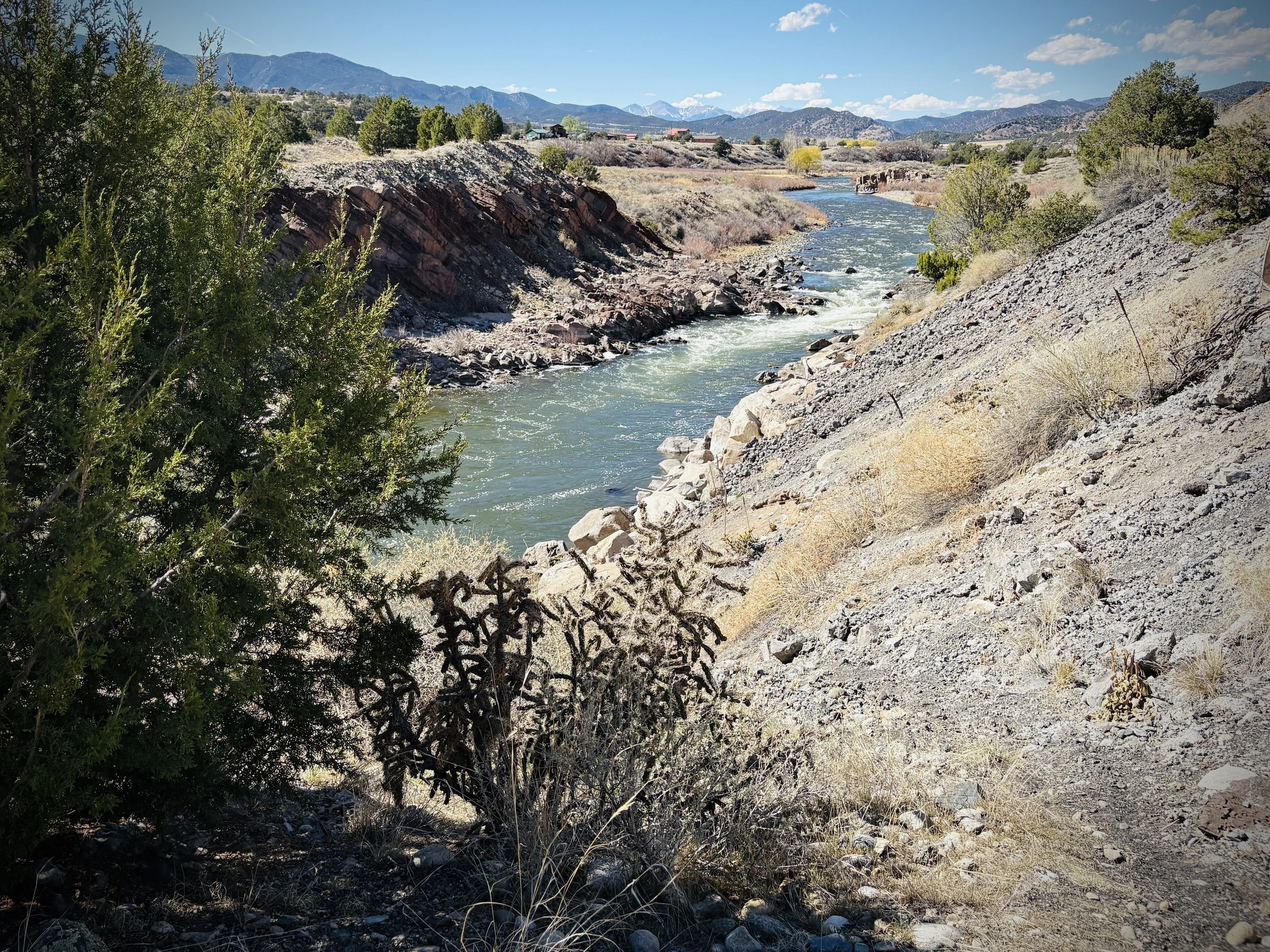
Tin cup rapid near Howard, Colorado in March 2026.
Overview:
In Colorado, we have had the worst winter we have ever seen. So with that, we are hearing some pretty extreme prognostication about what the river will have in store for us this year. Just know that not all rivers are created equal and what is true for the Yampa River or the Colorado River may not be true for the Arkansas River. Be very careful listening to broad generalizations on what might be expected for the health of all the fisheries in Colorado and the west. There is a lot of nuance and is not as simple as dry equals bad for all trout everywhere.
Weather:
Obviously, the winter was dry and warm. That was true for most of the Rockies, but more so the central and southern rockies. We have been seeing a slight change to that pattern this April. Storm after storm has impacted the central and northern mountains. However, it still has been generally warm which has brought more rain than normal for April. Looking ahead, the Arkansas Valley is typically pretty dry in late spring. But there are signs that a rapidly developing El Nino will be in place this summer which could potentially bring an active monsoon season. If you are unfamiliar with the concept of the North American monsoon, I am referring to a cycle of almost daily afternoon thunderstorms from about June 15 until about September 15 for the west and especially the southwest.
Water Temperatures:
Due to the relatively steep gradient of the Arkansas River, which drops 1000 feet in elevation from Buena Vista to Salida alone, the flows stay pretty swift. Combine that with the contour of a boulder and cobble strewn riverbed our fish have lots of deep cold water refuge. This river is well oxygenated even when you can find high temperatures in the slow shallow water along the edge. So, due to the quality habitat we have here we just plain don’t have the temperature related stress on the fish that you might see in slower gravel/sandy bottom rivers.
Flows:
For much of this spring the flows have been hovering in the 250-350 cfs range at the Wellsville Guage. This is very normal for this time of year. The question is if it will get much higher. The last time we had a snowpack anywhere close to what we have this year was in 2002. That year I believe our runoff peak was about 600 cfs. By comparison, 2024 was somewhere around 5000 cfs. Most years we see somewhere around 250-500 cfs in from the fall through early spring, 2000-3000 cfs during runoff and the rest of the summer is typically north of 700 cfs. I would expect similar flows to what we have now for the entire season. In the past, we have seen increases in trout populations after low flow years. Lower flows allow them to use less energy than during high flows. They can also find more food in lower clearer conditions. While not true for every river, low flows have been seen to be a net positive for the trout in the Arkansas River.
Clarity:
The spring here can be a mix of cloudy water and clear water usually due to how much snowmelt is occurring. This spring has been consistently cloudy but very much fishable. If we don’t see a typical runoff spike, which we probably won’t, fishable clarity will continue indefinitely. I would not expect to see much of a muddy unfishable period during runoff. However, summer might be affected by poor clarity during and after flash floods. If the potential for strong monsoons pans out this could be a problem. Typically, runoff cleans the banks of sediment in the upper river and tributaries. But if we don’t get a runoff, then flash floods in the summer could be even muddier than normal.
Habitat:
If you own property along the river please stop ripping out your willows. The willows we see along the river bank have a strong network of roots that prevents erosion and gives the riverbank stability. In places where the willows have been removed you’ll notice the river becoming wider and shallower. This provides the fish with less deep cold water refuge that they desperately need in low water years. This river still has plenty of that refuge, but this year should be a reminder to us that we don’t want to lose any of it. So, please leave the willows intact.
Food:
Anymore, this is a mayfly river. You can almost always catch a fish on small mayflies of one kind or another. I know a lot of people really like fishing the Mother’s Day Caddis hatch, but that hatch pales in comparison to the Blue Wing Olive hatch. Pale Morning Dun mayflies can be a regular afternoon occurrence all summer. Red Quill mayflies show up in late summer. Finally the last solid hatch the fish rely on before winter is a another BWO hatch. With that said, the trout in the Arkansas are very very opportunistic. Most any well-presented fly that is at least in the ballpark of what they are eating can get a strike. There is rarely a need to match a hatch.
Rigging:
In my opinion, tippet size should always match the size/weight of your fly, and the length of your leader should match the technique you are using or the conditions in which you’re fishing. If we see a lot of low and clear water this year that does not mean that you need longer and thinner leaders. Longer and thinner leaders may potentially be beneficial to your presentation, but it’s not because of the flows or clarity. If you want to read more about rigging, click here.
Float Fishing:
The river user that will be most affected by the low flows is going to be the boater. Rafting in low water is just a bummer. As a float fisherman I’m pretty used to boating in low water since much of the best fishing occurs when flows are lower. However, I may hit more rocks and have to drag my boat over shoals a lot this year. Also,lighter rafts like a Flycraft might allow you to do certain sections that my NRS Otter 140 is too big to do. It’s possible I don’t float above Big Bend this year.
FLOAT fishing Etiquette:
The fish in this river are pretty used to seeing a ton of boat traffic and will quickly go back to feeding after a raft comes through. So, I don’t typically lose much sleep over quietly boating through a wade angler’s water. But I don’t fish that water either. Certain sections of the river will see a ton of whitewater rafting/kayaking traffic right now. Don’t go into Brown’s Canyon on a Saturday and then complain about the rafters hurting your fishing. That would be like complaining that you are having trouble reading a book at a Metallica concert. Please keep to a max of 15 minutes of loading/unloading time on a boat ramp. I typically am in the habit of unstrapping and pumping my boat in the parking lot and then backing my trailer down the ramp and immediately putting my boat in the water and moving it as far up or downriver away from the ramp as possible while I park my truck or do a shuttle. I also NEVER let my dog run off leash around the ramp. The ramp is not the place to practice if you’re new to backing up trailers.
Wade fishing:
The Arkansas River can be intimidating for many wade anglers. Usually, we have powerful and sometimes dangerous currents. Expect to see much more wade friendly flows this year. You will likely be able to cross the river on foot in many places. That’s a huge benefit we don’t often see in the summer.
Wade fishing Etiquette:
Wade anglers here don’t often post up at a pool for long periods of time this time of year. They’re typically on the move and often look for a couple hundred upstream yards to fish. When in doubt, fish downriver of someone and not upriver. There’s lots of road access and if you come to a pull off that already has a car or two at it you should move on a find an empty pull off. With over 100 miles of Gold Medal Water there should be enough space to never feel like you’re combat fishing.